Carbon Commitments and Economic Consequences: Weighing the Arguments on Britain's Net-Zero Ambition
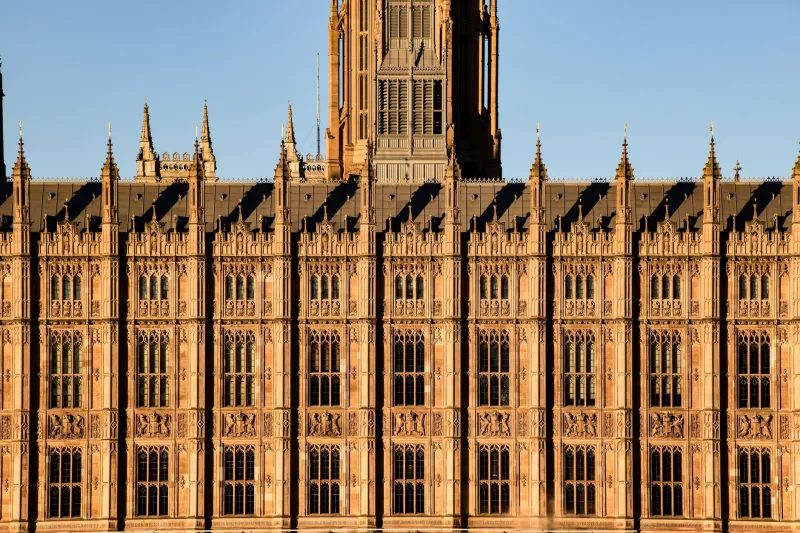
When Parliament enshrined the 2050 net-zero target into law through the Climate Change Act 2008 (as amended in 2019), the United Kingdom became one of the first major economies to make carbon neutrality a legal obligation rather than a political aspiration. The decision attracted considerable cross-party support at the time, yet the practical, financial, and social implications of delivering on that commitment have since become one of the most contested arenas in British public policy. For students of economics, environmental science, and political debate, few topics offer a richer intersection of evidence, ideology, and genuine uncertainty.
The Scientific Consensus and What It Does (and Doesn't) Settle
The starting point for any credible engagement with this debate is the scientific evidence on climate change itself. The Intergovernmental Panel on Climate Change (IPCC) Sixth Assessment Report, published between 2021 and 2022, concluded with high confidence that global average temperatures have already risen approximately 1.1°C above pre-industrial levels, and that without rapid, deep reductions in greenhouse gas emissions, the probability of exceeding the 1.5°C threshold identified in the Paris Agreement increases substantially within this decade.
For those arguing in favour of the net-zero commitment, the scientific evidence functions as the non-negotiable premise of the debate. If the physical consequences of unchecked warming — including more frequent extreme weather events, sea-level rise threatening coastal communities from East Anglia to the Hebrides, and disruption to agricultural systems — are accepted as credible risks, then the cost of inaction becomes the relevant comparator for any assessment of transition costs.
Critics of the net-zero framework, it is important to note, rarely dispute the underlying climate science in academic or policy circles. Rather, their arguments tend to focus on the pace, mechanism, and distributional consequences of decarbonisation — questions on which the scientific literature offers considerably less certainty than on the physical climate itself. This distinction is crucial for students seeking to construct intellectually honest positions: the debate is not primarily about whether climate change is real, but about what an economically rational and socially just response looks like.
The Economic Opportunity Argument
Advocates for ambitious net-zero policy, including bodies such as the Climate Change Committee (CCC) — the independent statutory adviser to the UK Government — argue that the transition to a low-carbon economy represents a significant industrial opportunity for Britain. The CCC's Sixth Carbon Budget, published in 2020, projected that net-zero could be achieved at a net cost of approximately one per cent of GDP by 2050, a figure it described as manageable given the economic damage that unmitigated climate change would otherwise inflict.
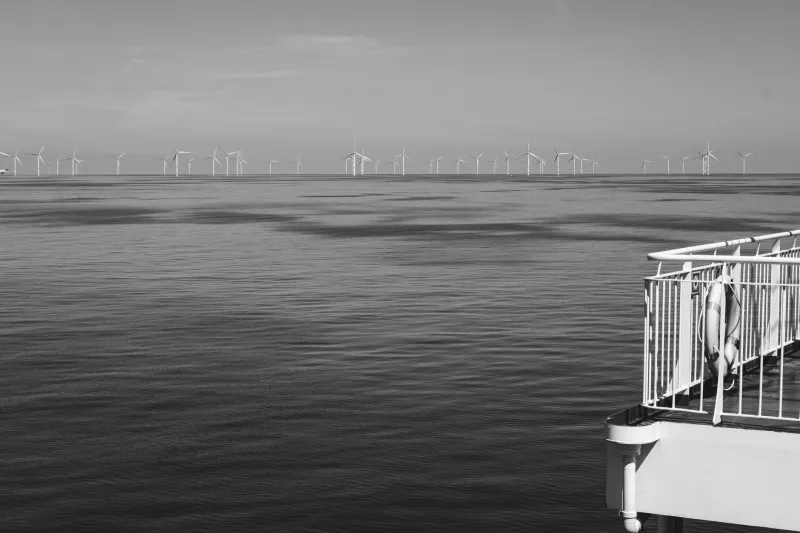
Proponents point to the growth of offshore wind as an illustrative case study. The UK is currently the world's largest offshore wind market by installed capacity, and the sector supports tens of thousands of jobs, with significant supply chain activity in regions including the Humber, the Tees Valley, and the Firth of Forth. The argument here is that early mover advantage in clean energy technologies — analogous to how Britain's early industrialisation conferred lasting economic benefits — could position domestic manufacturers and exporters favourably in global markets projected to be worth trillions of pounds over coming decades.
Green finance advocates, including voices within the City of London, further contend that Britain's financial services sector is well-placed to become a global centre for sustainable investment, provided regulatory frameworks keep pace with market demand. The establishment of the UK Infrastructure Bank and various green bond instruments has been cited as early evidence of this strategic positioning.
The Competitiveness and Cost Concern
The counter-argument, articulated with increasing force by industry bodies, some Conservative MPs, and think tanks including the Global Warming Policy Foundation, centres on the risk that aggressive decarbonisation could undermine British industrial competitiveness without producing commensurate global climate benefits.
The steel industry provides a frequently cited example. British Steel and Tata Steel's UK operations face substantial costs in transitioning from blast furnace to electric arc production — a shift that requires both capital investment and access to affordable, reliable low-carbon electricity. Critics argue that without adequate state support or border carbon adjustment mechanisms, energy-intensive industries may simply relocate production to jurisdictions with less stringent environmental regulation, resulting in 'carbon leakage' that reduces UK emissions on paper while increasing them globally.
Household energy costs represent a second major fault line. The Skidmore Review (2023) and various consumer advocacy groups, including Citizens Advice, have documented the disproportionate burden that higher energy prices place on lower-income households. The transition away from gas boilers to heat pumps — a central plank of domestic decarbonisation strategy — has provoked particular controversy, with critics arguing that upfront costs of between £7,000 and £15,000 per installation are prohibitive for many homeowners, and that the policy lacks sufficient accompanying support for those who cannot afford the switch unaided.
Those who emphasise these concerns do not necessarily oppose net-zero in principle; many argue instead for a more gradual transition timeline, greater investment in bridging technologies such as hydrogen, or a recalibration of who bears the financial burden of decarbonisation.
Jobs: Creation or Destruction?
The employment impact of net-zero is one of the most actively debated empirical questions in this space. The CCC and various trade union bodies, including the TUC, have projected net job creation across the green economy, with roles in renewable energy, energy efficiency retrofitting, and low-carbon transport expected to outpace losses in fossil fuel sectors. The TUC's 2023 analysis suggested that a managed transition could generate up to 1.24 million new green jobs by 2030.
Sceptics, however, question both the methodology and the geographic distribution of these projections. Even if aggregate employment figures are positive, the workers most affected by industrial transition — coalfield communities, oil and gas workers in the North Sea, workers in automotive manufacturing — are unlikely to be the same individuals who take up roles in offshore wind or sustainable construction. The concept of a 'just transition', widely endorsed in policy rhetoric but unevenly implemented in practice, attempts to address this concern, but critics argue it remains inadequately funded and insufficiently specific.
Constructing Your Position
The net-zero debate is one where the quality of your argument depends heavily on which costs and benefits you choose to foreground, over what timescale, and from whose perspective. A student arguing in favour of the 2050 target must engage seriously with household cost concerns and industrial competitiveness risks, not dismiss them. Equally, a student challenging the pace or design of the transition must grapple with the economic modelling on the cost of climate inaction, and with the moral dimension of intergenerational equity.
Britain's net-zero commitment is not simply a question of environmental policy — it is a debate about economic strategy, social justice, technological risk, and the obligations a society owes to future generations. Approached rigorously, it is among the most instructive topics available to students seeking to sharpen their capacity for evidence-based reasoning.