Graduating Without the Argument: Are British Universities Failing to Teach Students How to Think Against Themselves?
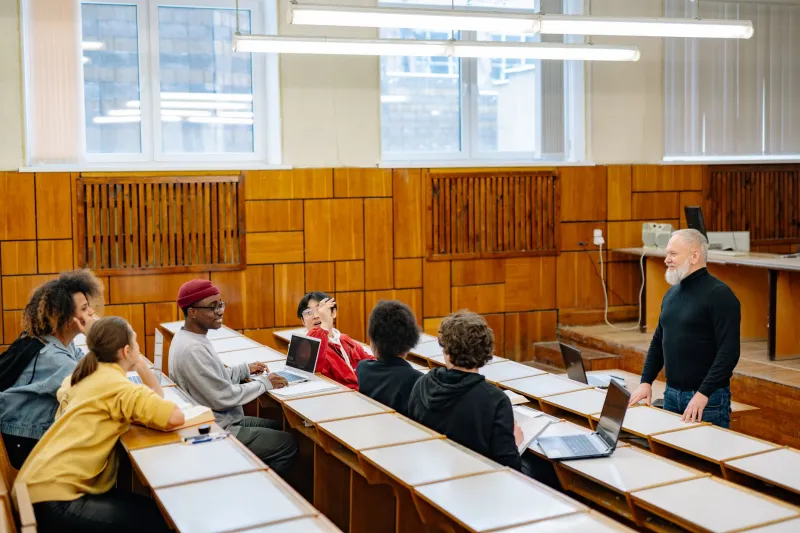
There is a particular intellectual skill that universities have historically claimed as their own: the ability to hold a well-reasoned position while remaining genuinely open to being wrong. It is distinct from mere tolerance, and considerably more demanding than polite disagreement. It requires a student to understand an opposing argument well enough to steelman it — to present it at its strongest — before attempting any rebuttal. Whether British universities are still producing graduates capable of doing this, or whether that capacity is quietly eroding beneath the pressures of ideological conformity and hyper-specialisation, is a question that deserves serious academic scrutiny.
The Curriculum Question
Most undergraduate programmes in England, Scotland, Wales, and Northern Ireland are structured around subject mastery. A student reading economics at a Russell Group institution will spend three years deepening their command of a particular intellectual tradition, its models, its methods, and its canonical disputes. What they are rarely asked to do is defend their discipline's core assumptions to a philosopher, a sociologist, or a political theorist who rejects them outright.
This is not a trivial omission. The Higher Education Policy Institute (HEPI) has repeatedly noted that British higher education leans heavily on assessment formats — essays, problem sets, dissertations — that reward the fluent deployment of established frameworks rather than the interrogation of first principles. Where seminar discussion does occur, it tends to operate within a shared disciplinary vocabulary. Students learn to disagree about conclusions; they are rarely required to disagree about foundations.
Interdisciplinary programmes, such as Philosophy, Politics and Economics (PPE) at Oxford or the broader liberal arts degrees now offered at institutions including University College London and King's College London, represent partial exceptions. Yet these remain minority pathways, and even within them, the formal cultivation of adversarial reasoning — the structured practice of arguing a position one does not hold, or of dismantling an argument one finds persuasive — is seldom embedded as an explicit learning outcome.
Campus Culture and the Chilling of Dissent
The curricular question is complicated by a parallel debate about campus culture. Since approximately 2015, British universities have attracted sustained commentary — from journalists, politicians, and academics themselves — about whether certain viewpoints are effectively unwelcome in seminar rooms and student unions. The debate has generated considerably more heat than light, partly because the available evidence is genuinely mixed.
Surveys conducted by organisations including the Policy Exchange think tank and the More in Common research group suggest that a non-trivial minority of students — particularly those holding conservative or traditionalist views — report self-censoring in academic settings. A 2019 survey found that roughly a third of right-leaning students in British universities felt unable to express their opinions freely in class. Critics of such surveys argue, with some justification, that methodological limitations make the findings difficult to interpret: feeling uncomfortable expressing a view is not the same as being prevented from doing so, and discomfort can itself be a productive intellectual experience.
What is harder to dismiss is the structural asymmetry in how universities handle controversial speech. Several high-profile incidents — including the disinvitation of speakers at Edinburgh, Bristol, and Cardiff — have demonstrated that institutional risk-aversion, rather than principled ideological gatekeeping, often drives decisions about whose arguments are permitted a platform. The effect, whatever its cause, is that students may graduate having encountered a narrower range of rigorously presented opposing arguments than the university's stated mission would imply.
What the Research Actually Shows
The empirical literature on critical thinking development in British higher education is instructive, if not entirely reassuring. A longitudinal study published in the journal Higher Education found that whilst students demonstrated measurable gains in disciplinary reasoning over the course of their degrees, improvements in domain-general critical thinking — the capacity to evaluate arguments outside one's own field — were considerably more modest. The implication is that university education is doing something valuable, but not quite the thing it most loudly advertises.
Research from the Nuffield Foundation on graduate employability has similarly highlighted that employers consistently rank "the ability to engage constructively with perspectives different from one's own" among the most sought-after and least reliably present attributes in new graduates. This is not merely a soft-skills complaint. It reflects a structural gap: the capacity to argue well against oneself, to identify the strongest version of a counterargument and respond to it honestly, is precisely the kind of transferable intellectual competence that structured debate training and adversarial pedagogy are designed to develop — and that conventional assessment largely fails to measure.
The Case for Adversarial Pedagogy
There is a growing academic literature on what might broadly be called adversarial or dialogic pedagogy — teaching methods that deliberately place students in the position of constructing and defending arguments they may not personally hold. Moot courts in law schools represent one established variant. Structured academic controversy, a technique developed in educational psychology, is another: students are assigned positions, required to argue them rigorously, then asked to switch sides before working towards a synthesis. Evidence from secondary and post-secondary settings suggests that such approaches produce measurable improvements in both argument quality and intellectual humility.
The question for British universities is whether there is institutional will to embed such approaches more widely. This is partly a resource question — adversarial formats are time-intensive and difficult to scale — and partly a cultural one. Academics who have spent careers developing and defending particular theoretical positions are not always natural enthusiasts for pedagogies that treat those positions as equally available for demolition as any other.
Grounds for Cautious Optimism
It would be misleading to suggest the picture is uniformly bleak. The expansion of student debating societies, the growth of organisations such as Debate Mate and the English-Speaking Union's university programmes, and the increasing prominence of structured argumentation in law, medicine, and public policy curricula all represent genuine countervailing trends. Some institutions have invested seriously in academic skills frameworks that explicitly include argument construction and counter-argument analysis as assessed competencies.
Moreover, the very fact that this debate is being conducted — in university common rooms, in policy documents, in the pages of journals and newspapers — suggests that the capacity for rigorous self-examination has not entirely deserted British higher education. The question is whether that self-examination will translate into curricular and cultural change, or whether it will remain, as institutional self-criticism so often does, a conversation that changes nothing.
A Question Worth Arguing About
For students and educators engaging with this debate, the underlying issue is not whether universities should enforce ideological diversity or manufacture artificial controversy. It is whether the cultivation of genuine argumentative rigour — the kind that requires a student to understand, represent, and challenge positions they find uncomfortable or implausible — is being treated as a core educational purpose or a peripheral aspiration. The evidence suggests it is more often the latter. Whether that is good enough is, appropriately, a question worth arguing about.