The Quiet Exodus: What Britain Loses When Its Sharpest Analytical Minds Abandon Public Life
There is a particular kind of professional disappearance that rarely makes the headlines. It does not announce itself with a resignation letter or a public statement. It happens gradually: a policy analyst declines to contribute to a government consultation; a former parliamentary researcher pivots to management consultancy; a university academic stops writing for general audiences. Individually, each departure seems unremarkable. Collectively, they may represent one of the more consequential and least discussed shifts in British public life.
The question this article poses is not merely sociological. It is, at its core, a question about the health of argument itself. If Britain is systematically losing the individuals most capable of constructing, stress-testing, and dismantling complex reasoning, what does that mean for the quality of decisions made in Parliament, in public institutions, and in the national conversation more broadly?
The Environment That Repels
To understand the exodus, it is necessary first to understand the environment from which people are departing. British public life has, by several measures, become less hospitable to the kind of careful, qualified, evidence-responsive argumentation that characterises genuinely rigorous thinking.
Social media has compressed the space available for nuance. A well-constructed argument that acknowledges its own limitations — the hallmark of intellectual honesty — performs poorly against a confident, unqualified assertion. On platforms where engagement metrics reward provocation over precision, the individual who says "the evidence here is mixed" is structurally disadvantaged against the individual who says "the evidence is clear." For those trained to reason carefully, this asymmetry is not merely frustrating; it is professionally dangerous.
Reputational risk compounds the problem. In an era of rapid online mobilisation, a single misread sentence, a poorly chosen phrase, or an argument taken out of context can precipitate a public controversy disproportionate to any underlying error. For academics, think-tank researchers, and civil servants weighing the costs and benefits of public engagement, the calculus increasingly favours silence. The rational response to an irrational environment is often withdrawal.
The Political Pipeline and Its Leaks
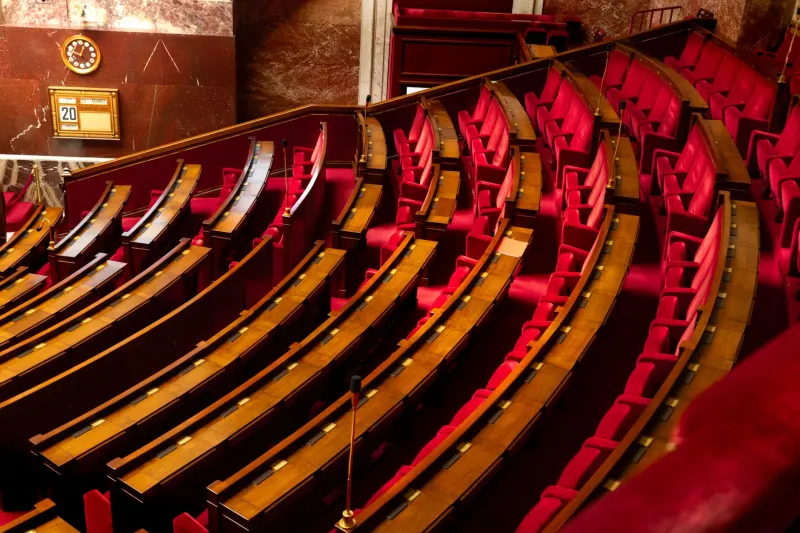
The consequences are perhaps most visible in electoral politics. There is a well-documented concern among political scientists that the British parliamentary system has become less attractive to candidates with deep subject-matter expertise. The demands of constituency work, the culture of partisan loyalty, and the performative nature of much parliamentary debate create conditions that suit a particular temperament — one not always characterised by a disposition towards careful analytical reasoning.
This is not a claim about intelligence. Many MPs are highly capable individuals. It is, rather, a structural observation: the skills that help a person win a selection contest, survive a media cycle, and maintain party discipline are not identical to the skills required to scrutinise legislation, interrogate expert evidence, or construct a coherent long-term policy argument. When the former consistently crowds out the latter, the institution suffers in ways that are difficult to quantify but not difficult to observe.
Former special advisers and parliamentary researchers — individuals who often possess precisely the analytical capabilities the system needs — frequently report that the gap between the quality of thinking that occurs in private briefings and the quality of argument that surfaces in public debate is substantial. The incentive to close that gap publicly is, for many, outweighed by the risks.
Academia's Retreat from the Public Square
Higher education presents a parallel dynamic. British universities contain an extraordinary concentration of individuals trained in rigorous argumentation, evidential reasoning, and the systematic evaluation of competing claims. Yet the proportion of academic researchers who engage substantively with public and policy debates has, by many accounts, declined rather than grown — even as the platforms for doing so have multiplied.
The reasons are structural. Research Excellence Framework pressures incentivise academic publication over public communication. Institutional risk-aversion, particularly following high-profile controversies involving academics who expressed heterodox views, has made universities more cautious about facilitating or encouraging public engagement. And the personal costs of online hostility — which falls disproportionately on researchers in politically sensitive fields — have persuaded many that the effort is simply not worth the return.
The result is a peculiar inversion: at the precise moment when public access to rigorous analysis is most needed, many of those best placed to provide it are retreating behind the paywall of academic journals that most citizens will never read.
What the Private Sector Gains
The individuals who leave public life do not, of course, cease to think. They redirect their capabilities. Management consultancies, financial institutions, technology firms, and legal practices have become significant beneficiaries of the talent that public institutions struggle to retain. The analytical skills that might have been applied to scrutinising health policy or stress-testing infrastructure spending are instead deployed in the service of corporate strategy.
This is not a moral criticism of those who make such choices. The rational individual, confronted with lower pay, higher reputational risk, and a more hostile working environment in the public sphere, is behaving entirely reasonably when they accept a better-compensated, less exposed role in the private sector. The problem is systemic, not individual.
What the private sector gains, however, the public realm loses. The asymmetry matters because the quality of public decision-making is not merely an abstract concern — it has direct consequences for the allocation of resources, the design of institutions, and the welfare of citizens.
Rebuilding the Conditions for Rigorous Public Argument
If the diagnosis is correct, the prescription is not simple. Several interventions merit serious consideration in the British context.
First, institutional reform within Parliament and the civil service could do more to create protected space for analytical dissent — environments in which the individual who says "this argument does not hold" is rewarded rather than marginalised. Select committees already perform some of this function, but their findings too rarely penetrate the executive decision-making process.
Second, universities and learned societies might reconsider how they evaluate and reward public engagement. If the REF cannot easily accommodate impact that manifests as improved public reasoning rather than measurable policy change, that is a limitation worth addressing directly.
Third, and perhaps most fundamentally, there is a question about media culture. Broadcasters, editors, and platform designers all make choices — consciously or otherwise — about which kinds of argument they amplify. A media environment that consistently rewards certainty over accuracy, and fluency over rigour, will continue to produce the incentive structures that drive careful thinkers away.
Britain has a long tradition of valuing robust, evidence-grounded argument — in its legal culture, its parliamentary history, and its scientific institutions. That tradition is not self-sustaining. It requires, in every generation, individuals willing to practise it publicly and institutions willing to support them. The quiet exodus described here is, in that sense, not merely a talent problem. It is a warning about the kind of public discourse Britain is in the process of choosing.