Certain and Wrong: Why Overconfident Voices Dominate British Public Debate
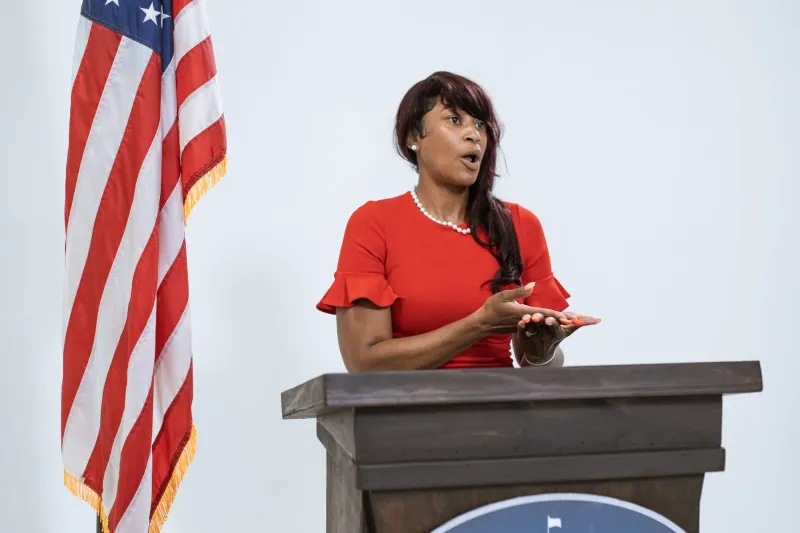
There is a familiar scene in British public life. A panel discussion, a parliamentary committee session, or a television debate reaches a pivotal moment. One participant—perhaps a scientist, an economist, or a public health specialist—offers a measured assessment, carefully hedged with phrases such as the evidence broadly suggests or we should be cautious about drawing firm conclusions. The other participant, armed with little more than conviction and a well-rehearsed talking point, leans forward and declares, simply and emphatically, that they are right. Polling conducted after such exchanges frequently reveals that audiences found the second speaker more persuasive. This is not an accident. It is a predictable consequence of how human minds process argument—and it has serious implications for the quality of British public discourse.
The Psychology of Perceived Competence
Decades of research in social and cognitive psychology have established a robust link between expressed confidence and perceived credibility. In a landmark series of studies, Cameron Anderson and colleagues at the University of California demonstrated that individuals who project certainty are routinely judged by observers as more knowledgeable than those who qualify their claims—even when objective assessments of their actual knowledge reveal the reverse. The mechanism is straightforward: audiences lack the specialist expertise to evaluate the content of complex arguments directly, so they rely instead on observable signals. Fluency, pace, posture, and above all, the absence of hesitation, function as proxies for competence.
This dynamic is compounded by what psychologists term the Dunning-Kruger effect, first described by David Dunning and Justin Kruger in 1999. Their research found that individuals with limited knowledge in a given domain tend to overestimate their own competence, partly because the very skills required to recognise one's own limitations are the same skills that genuine expertise develops. The result is a perverse inversion: those who know least feel most certain, while those who know most are most acutely aware of the gaps in current understanding. In a debating context, this translates directly into a structural disadvantage for experts. The virologist who understands the probabilistic nature of epidemiological modelling will naturally speak in terms of confidence intervals; the commentator with a passing familiarity with the field will declare the matter settled.
Epistemic Humility as a Rhetorical Liability
The problem is not simply that audiences misread confidence as competence. It is that the conventions of good scientific and academic reasoning—acknowledging uncertainty, citing disconfirming evidence, attributing findings to specific conditions—actively undermine rhetorical effectiveness in adversarial public formats. A barrister who conceded every point of ambiguity would lose cases; a politician who prefaced every policy claim with a literature review would lose elections. British debate culture, shaped by the adversarial traditions of Parliament and the common law, tends to reward the clear assertion over the conditional one.
This creates what might be called the confidence-competence trap: the more genuinely expert a speaker is, the more likely they are to communicate in ways that audiences interpret as uncertainty or weakness. The cautious expert, hedging appropriately, is outpaced by the overconfident advocate who has mistaken their partial understanding for mastery. The audience, unable to adjudicate between the two on the merits, awards the rhetorical victory to the speaker who seemed more sure.
For educators and students of argument, this is not merely an interesting psychological curiosity. It is a structural feature of public discourse that shapes which ideas gain traction, which policies attract support, and which voices are amplified by media institutions hungry for quotable certainty.
The Role of Media Formats and Institutional Incentives
British broadcast media bears some responsibility for entrenching these dynamics. The standard political interview format—confrontational, time-pressured, and oriented towards the memorable clip—systematically disadvantages nuanced argument. When a presenter asks a climate scientist whether the summer floods were caused by climate change, the honest answer involves probability distributions, attribution science, and baseline variability. The answer that travels is yes or no. Producers and editors, working under commercial pressures, frequently amplify the latter at the expense of the former.
Social media has intensified the problem. Platform algorithms that optimise for engagement tend to surface content that provokes strong emotional responses, and confident, unqualified claims are considerably more emotionally legible than probabilistic ones. Research by the Reuters Institute for the Study of Journalism at Oxford has consistently found that misinformation spreads faster and further than corrections, partly because misinformation is typically delivered without caveats.
What Debate Education Can Offer
If the confidence-competence trap is a structural problem, it requires structural solutions—and debate education offers one of the most promising entry points. Formal debating teaches participants to distinguish between the strength of an argument and the confidence with which it is delivered. Experienced adjudicators are trained to evaluate the logical relationship between a claim, the evidence offered in its support, and the reasoning that connects them, rather than the speaker's demeanour. In this sense, competitive debate provides a rare institutional environment in which epistemic humility is not penalised.
British schools that incorporate structured argumentation into their curricula—through programmes such as Debate Mate or the English-Speaking Union's competitions—are equipping pupils with a critical tool: the ability to interrogate the source and quality of a speaker's confidence, rather than accepting it at face value. When a student learns to ask what is the evidence behind that claim? and what would change your mind?, they are developing precisely the cognitive habits that protect against confidence bias.
There is also value in teaching students about the psychology of persuasion itself. Understanding that audiences are susceptible to confidence cues does not inoculate them entirely against those cues, but it does raise the threshold. A student who knows about the Dunning-Kruger effect is at least partially armed against its effects.
Rebalancing the Debate
None of this is to suggest that confidence is always misplaced, or that all qualified claims are more reliable than unqualified ones. Genuine expertise, clearly and directly communicated, is both possible and necessary. The goal is not to make experts more tentative, but to make audiences more sophisticated—to cultivate the habit of asking not only how certain does this person sound? but how certain should they be, given what is actually known?
Britain's public discourse is not short of confident voices. What it is increasingly short of is the shared evaluative framework that allows citizens to distinguish confidence grounded in evidence from confidence grounded in ignorance. Closing that gap is, at its core, an educational challenge—and one that belongs as much in the debate classroom as in any laboratory or lecture hall.